
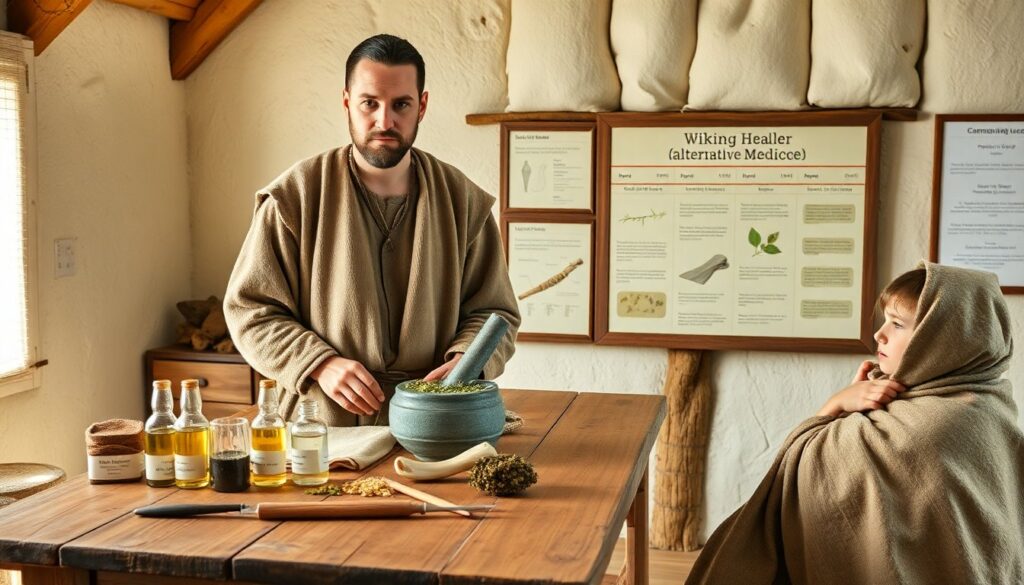
Viking alternative medicine appears in old texts, archaeology, and folklore. Researchers study plants, tools, and burial finds. They map practices and compare them to later folk medicine. The approach values practical healing and community care. The article explains core principles, key herbs, common treatments, and the role of healers in Norse life.
Key Takeaways
- Viking alternative medicine combined practical healing with community care, using local plants, animals, and minerals for treatments.
- Healers held respected social roles, providing medical, spiritual, and legal support while passing knowledge through apprenticeships.
- Common herbs like yarrow, mugwort, angelica, and heather were essential, prepared as teas, poultices, and infusions tailored to specific ailments.
- Treatments included bone setting with splints, infection control using poultices and antiseptic smoke, and symptom relief through sweat baths and herbal rinses.
- Christianization influenced but did not erase Viking folk remedies, which are reconstructed today through archaeology, saga records, and pollen analysis.
What Viking Medicine Looked Like: Principles And Historical Context
Viking alternative medicine rested on observation and local knowledge. Healers used visible signs to diagnose wounds, fevers, and digestive issues. They sourced remedies from local plants, animals, and minerals. They mixed physical care with spoken formulas. Travel and trade brought new plants and ideas into Norse regions. Christianization changed some practices but did not erase many folk remedies. Archaeology shows tools, bottles, and plant residues that match written lists. Scholars treat saga accounts as partial records. They compare saga details with forensic evidence to reconstruct common practice.
Healers, Wise People, And The Social Role Of Medicine In Norse Society
Healers held an explicit social role. Wise people treated the sick, midwives assisted births, and household heads managed common wounds. Healers traded services for goods or social favors. They taught apprentices within families. Saga records name specific healers and describe their status. The community sought healers for chronic and acute ailments. Healers combined plant remedies with physical care and ritual speech. Some healers also held legal and spiritual roles. Communities respected successful healers and often recorded their deeds in oral history and law texts.
Common Herbs And Preparations Used By The Vikings
Vikings used many common herbs for daily care. They brewed teas, made poultices, and infused oils. They dried leaves for winter use. They used salt and smoke for preservation. They prepared decoctions for stomach pain and gargles for throat complaints. They applied crushed leaves to wounds. They infused plant material in fat or alcohol to extract active compounds. Record lists and pollen analysis show consistent use of certain species. Healers favored plants that grew near settlements for easier access.
Key Herb Examples: Yarrow, Mugwort, Angelica, And Heather — Uses And Preparations
Yarrow served as a wound dressing and as a tea for fever. Healers crushed yarrow leaves and applied them directly to cuts. Mugwort acted as a digestive aid and a bitter tonic. Practitioners dried mugwort and brewed it into tea. Angelica served as a respiratory aid and a carminative. Healers sliced roots and simmered them for broth or syrup. Heather provided antiseptic and diuretic effects. People burned heather for smoke baths or steeped its flowers for mild teas. Practitioners combined herbs in simple recipes and adjusted doses by age and weight.
Practical Treatments: Bone Setting, Poultices, Sweat Baths, And Sterile Techniques Of The Time
Healers treated fractures with splints and bindings. They aligned bones by visual assessment and immobilized limbs with wood and linen. They used poultices made from fats and plant matter to draw infection. They applied cold water and ice when available to reduce swelling. They used steam and sweat baths to relieve pain and treat fever. They burned herbs in tents to create antiseptic smoke. They rinsed wounds with beer or salted water to reduce microbes. They monitored patients and changed dressings to prevent infection.